House Cleaning vs Maid Service — What's the Difference?
Industry terms used interchangeably with subtle differences in scope and team structure. Plus why our brand uses 'maid service'.
Published May 9, 2026
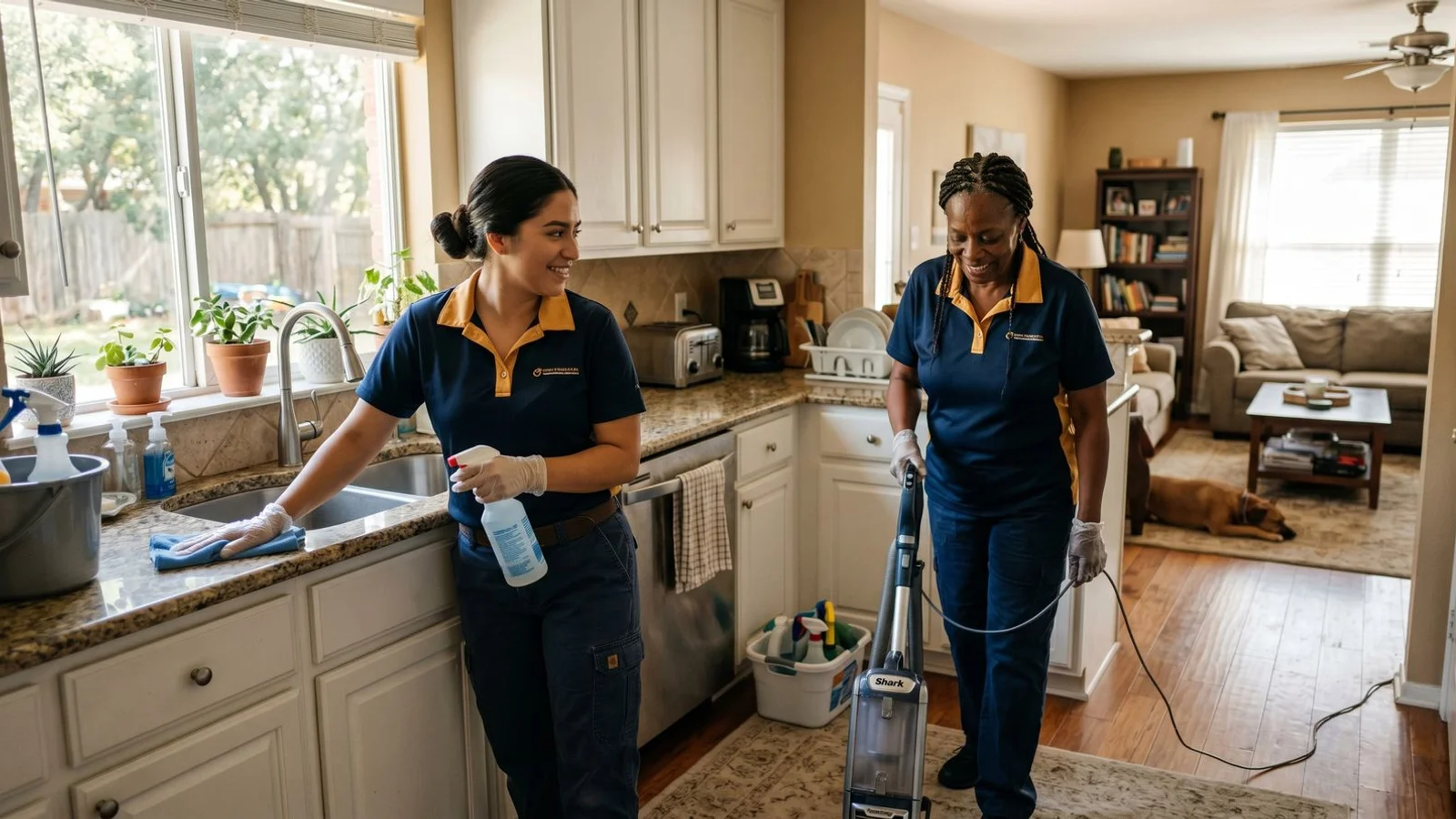
We know that deciphering the terminology of residential cleaning can be frustrating for busy homeowners and renters.
Many people search for “house cleaning vs maid service” expecting to find the exact same thing.
Our experience shows that while the terms overlap heavily, the industry uses each one with subtle differences in scope and team structure.
Knowing these subtle differences is crucial before you book your next appointment.
We are going to break down the main reasons these two labels differ and then walk through the exact factors you should consider.
Let’s look at the data, what it actually means for your budget, and how to find the perfect fit for your space.
How the industry uses each term
We define these terms based on the operational structure and consistency of the cleaning team.
A maid service definition typically involves a formalized team of two or more professionals executing a standardized checklist, while house cleaning often refers to flexible work by a solo operator.
Our team sees that nearly 10% of U.S. households currently pay for these professional services to maintain their living spaces.
Understanding the operational differences helps you match your specific needs to the right provider.
We categorize the core differences into a few key operational models.
Here is a clear breakdown of how the industry separates the two concepts:
- House cleaning service: Generic terminology often used by solo independent cleaners. Scope is highly flexible, covering one-time projects, deep cleans, or move-out preparations.
- Maid service: A slightly more formal label that implies a team-based approach. This setup suggests recurring service intervals, like weekly or biweekly visits, following a strict company checklist.
Our clients often find that standard house cleaning costs average between $118 and $237 per visit in 2026, according to recent Angi market data.
In practice, the boundary is fuzzy, and the difference is operational rather than legal.
We operate a business model that proudly covers both types of residential care.
Where they actually differ
Team structure and service consistency are the true dividing lines between these two options.
We find that maid services more commonly send coordinated teams of two or three, whereas house cleaning companies often deploy a solo worker.
A 2026 Thumbtack report notes that the average U.S. home size is around 2,000 square feet, which makes team-based work highly efficient for larger spaces.
Our recurring clients generally prefer this team efficiency to save time.
Solo cleaners, on the other hand, often build deeper personal rapport when maintaining smaller homes or apartments.
We have noticed four specific areas where the operational models diverge.
| Feature | Maid Service | House Cleaning |
|---|---|---|
| Team Structure | Teams of 2 to 3 professionals | Often a solo operator |
| Standardization | Strict, consistent checklists | Highly customized per customer |
| Primary Focus | Recurring weekly or biweekly schedules | One-time, project, or move-out work |
| Branding Perception | Formal, business-like operation | Independent, owner-operated |
None of those distinct categories are strict legal rules.
We encourage homeowners to watch out for exceptionally low pricing regardless of the label.
A common pitfall is hiring an operator who charges $60 to $80 for a full home, which frequently indicates a complete lack of liability insurance or formal training.
Our experience confirms that plenty of solo cleaners run formalized recurring programs, and plenty of large services do one-time deep cleans.
Why we use “maid services” branding
The branding choice for a cleaning company usually reflects its underlying business model.
Our organization, San Antonio Maid Services, uses the “maid services” label because our operation is entirely team-based and standardized.
Sending teams of two or three ensures consistent quality for most residential jobs.
We follow rigorous checklists across all clients to build reliable, recurring schedules.
The label perfectly fits the formalized operation without implying a difference in social status.
We treat our staff as the dedicated professionals they are, ensuring everyone is background-checked, bonded, and fully insured.
This specific terminology is an accepted standard recognized by the International Sanitary Supply Association (ISSA).
Our team specifically aligns with the ISSA Cleaning Industry Management Standard (CIMS).
This non-prescriptive framework requires organizations to implement strict quality controls, thorough safety training, and proper chemical handling procedures.
We use the label simply to communicate this high level of operational maturity to you.
When buyers want one vs the other
Choosing between a house cleaner vs maid depends heavily on the size of your property and the frequency of service required.
We recommend assessing your specific property goals before requesting a quote.
Your decision should align with how much standardization you expect during each visit.
We have broken down the typical buyer preferences to help you decide.
Signs you need a maid service
Larger properties often require a structured approach to maintain cleanliness.
We suggest this formal route under a few specific conditions:
- You need recurring biweekly or weekly service to maintain a busy household.
- Your home is larger than 2,000 square feet and benefits from team-based efficiency.
- You value a standardized checklist across every single visit.
- You prefer a company-level relationship rather than relying on a single individual.
Signs you need house cleaning
Smaller spaces or temporary projects often call for a more flexible, independent approach.
We advise booking an independent cleaner if your situation matches these criteria:
- You require one-time specialty work like a post-construction cleanup or a move-out clean.
- Your home is a smaller apartment where a solo cleaner is highly efficient.
- You want a deeper personal relationship with the exact same person every time.
- You prefer informal, owner-operated businesses.
Move-out cleanings are a perfect example of specialty work, averaging between $250 and $500 in the current U.S. market depending on property condition.
Our company, San Antonio Maid Services, actually covers both operational styles perfectly.
The label is merely a shorthand description, not a rigid limit on the services provided.
What actually matters
The specific marketing terms a company uses are far less important than their professional credentials.
We urge every client to verify safety and satisfaction guarantees before allowing anyone into their home.
Legitimate liability insurance for cleaning companies costs between $500 and $2,000 annually per employee.
Our team considers these financial protections non-negotiable for your peace of mind.
These are the critical decision factors you must verify:
- Background-checked: Every single person who enters your home requires thorough vetting.
- Bonded: This specific coverage protects you financially against potential theft.
- Insured: Active liability policies cover any accidental damage to your property.
- Workers’ comp: This essential insurance covers the team’s safety and protects you from medical liability if an injury occurs in your home.
- Satisfaction guarantee: A reliable business always provides clear recourse if something goes wrong.
We believe these are the exact questions to ask, regardless of whether the company calls itself a maid service or a house cleaning service.
Taking the time to verify these credentials prevents costly liabilities later.
Next steps for your home
We encourage you to read more on vetting before you hire, so see how to vet a trustworthy cleaning company.
Resolving the house cleaning vs maid service debate simply comes down to finding a credible, insured provider.
Our staff is standing by, so if you are ready to book, get a free quote in 60 seconds.