How Often Should You Deep Clean Your Home?
Recommended cadence: 1–2x yearly baseline; quarterly for pets, allergies, high-traffic. Signs you need one now.
Published May 9, 2026
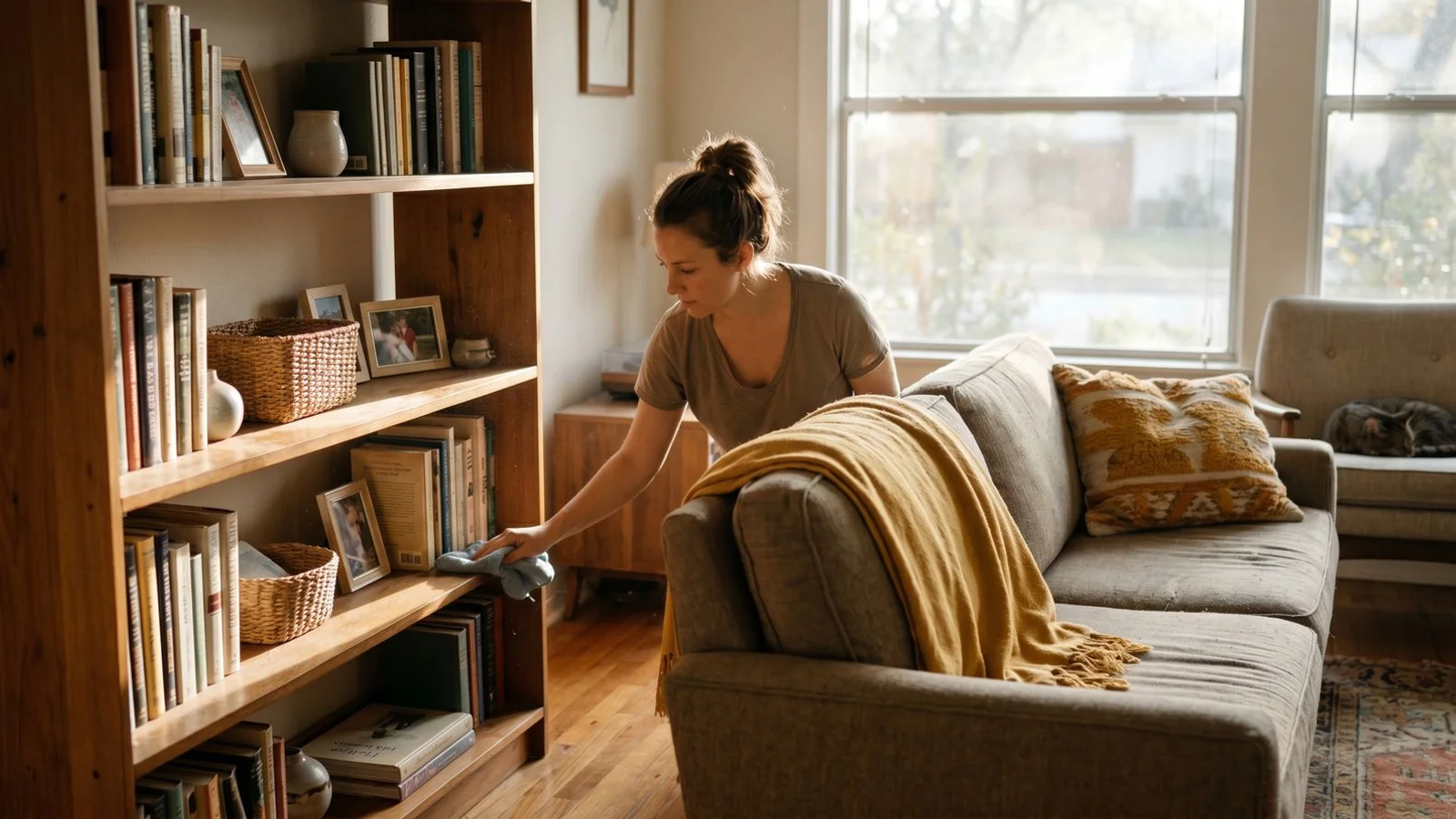
We know keeping up with daily life makes it hard to maintain a perfectly clean home. The right deep cleaning cadence depends on household variables like pets, allergies, traffic, and how much you cook.
Our team at San Antonio Maid Services is dedicated to providing top-tier residential cleaning services that prioritize quality and client trust. The baseline most San Antonio households should plan for is one to two deep cleans per year, scheduled around cedar season and holidays.
Figuring out how often should you deep clean becomes much easier when you consider three main factors:
- Indoor air pollution levels.
- Local pollen and allergy seasons.
- Your daily household traffic.
We suggest reviewing the data below to find a practical schedule for your space.
Figuring out exactly what your home needs is the first step to breathing easier.
This guide expands on what we cover in our full deep cleaning service; use it as the deep-dive companion to that page.
Baseline: 1-2 deep cleans per year
For a typical San Antonio household with light traffic, no pets, and a basic allergy load, one annual deep clean is the absolute minimum. We consider two sessions per year to be a much more comfortable standard. The pattern that works best involves one visit in late winter, after cedar fever, and one before holiday hosting in the fall.
Recent 2026 US Environmental Protection Agency data shows Americans spend about 90 percent of their time indoors, where pollutants are often two to five times higher than outside. Our crews prioritize HEPA vacuuming to capture those trapped particles.
| Cleaning Frequency | Ideal Household Profile | Primary Benefit |
|---|---|---|
| One Annual Deep Clean | Low traffic, no pets, low allergies | Maintains baseline hygiene and protects surfaces. |
| Bi-Annual Deep Clean | Moderate traffic, mild allergies | Captures seasonal dust and prepares for hosting. |
This baseline assumes you are also running recurring biweekly standard cleaning. Without recurring service, deep cleaning frequency goes up because surfaces in the scope of standard cleaning fall behind too.
Quarterly for pet, allergy, and high-traffic households
Households with multiple pets or allergies trend toward four deep cleans per year. We find that quarterly deep cleaning fits these homes without becoming overkill. The deep clean acts as a reset every 90 days rather than letting buildup compound.
Research on the American house dust mite shows their life cycle lasts around 65 to 100 days, during which a single mite produces up to 1,000 allergy-causing waste particles. Our quarterly schedule disrupts this cycle right as allergens peak. Households with these factors need more frequent attention:
- Multiple pets: Heavy shedding and rapid dander accumulation require constant management.
- Severe allergies: Cedar pollen, dust mites, and mold sensitivity demand regular allergen extraction.
- Work-from-home full-time: A home gets seven days of heavy usage, doubling the typical wear.
- Frequent hosting: Having guests every weekend increases traffic in common areas and guest bathrooms.
- High-traffic homes: Kids and pets bring in dirt that wears down floors and baseboards.
Keeping up with this quarterly rhythm ensures your indoor air quality remains high year-round.
Signs you need a deep clean now
You are due for a deep clean right now if you can answer yes to two or more specific warning signs. We tell clients to look closely at their baseboards and air vents for the first clues.
Indoor air pollution ranks among the top five environmental risks to public health, according to the EPA. Waiting too long allows dust and microscopic particles to circulate endlessly through your HVAC system. Our technicians constantly see how neglected surfaces impact indoor air quality.
Watch for these clear indicators:
- Visible dust settles on baseboards or the tops of kitchen cabinets.
- Ceiling fan blades have a thick dust ring on the leading edge.
- Bathroom grout looks significantly darker than the surrounding tile.
- Kitchen exhaust hoods feel sticky or greasy to the touch.
- Allergies are flaring up constantly inside the home.
- Pet odor is immediately detectable when you walk through the front door.
- It has been six or more months since the last professional deep clean.
- Recurring cleaning is keeping up, but the home does not feel fresh.
San Antonio seasonal timing
Two windows in the year matter for San Antonio specifically. We highly recommend booking these seasonal visits well in advance.
Late February. Cedar fever season runs from December through mid-February, peaking heavily in January. By late February, the cedar plume has deposited a winter’s worth of pollen on every horizontal surface. Our late-February deep clean serves as a complete environmental reset.
“San Antonio’s mountain cedar season peaks in January, making a late-February deep clean the most effective way to remove accumulated pollen from your home.”
This includes HEPA capture of pollen-loaded surfaces, soft-goods extraction, and vent return cleaning. We see allergy improvements within days of this deep clean for cedar-sensitive households.
October. Scheduling a session before holiday hosting and the December cedar season is incredibly strategic. October deep cleaning gives you a fresh home through Thanksgiving, Christmas, and New Year hosting. Our crews make sure your home is spotless before the busy season begins.
| Seasonal Focus | Timing | Primary Goal |
|---|---|---|
| Winter Reset | Late February | Extract settled cedar pollen and allergens. |
| Holiday Prep | October | Sanitize before guests and prepare for winter. |
This timing sets up cedar season with clean surfaces that show new pollen accumulation faster. Both of these windows usually fill four to six weeks ahead. We hold capacity for recurring customers, but new bookings should definitely plan ahead.
Recurring + deep cleaning
The most efficient pattern for chronically busy households combines regular maintenance with thorough resets. We structure this specific cadence to keep your home in top condition year-round. Total annual labor on this pattern requires roughly 60 to 80 hours, depending on home size.
Without recurring service, achieving the same condition takes significantly more total deep-cleaning hours. Our team handles the heavy lifting so you can focus on other priorities. Here is the ideal schedule:
- Recurring biweekly standard cleaning for routine maintenance and surface management.
- Two deep cleans per year to reset surfaces that standard cleaning does not address.
- One carpet cleaning annually or biannually to extract embedded dirt.
- Periodic add-ons as needed for specific appliances like the oven or refrigerator.
When a single deep clean is enough
Some households book a single deep clean once and do not return for recurring service. We understand this makes perfect sense for specific, event-driven situations.
The 2025 National Association of Realtors Remodeling Impact Report highlights that fresh aesthetics and extreme cleanliness drastically improve home listing appeal. Our specialized teams execute a thorough one-time reset rather than building a maintenance relationship. Pricing for these projects reflects single-visit rates.
Consider a one-time service for these common scenarios:
- Pre-listing for real estate to maximize buyer appeal.
- Post-renovation to remove construction dust before move-in.
- Move-in cleaning to sanitize the space before your furniture arrives.
- Once-a-year overhaul before a major holiday hosting event.
For more on what this service covers, see what’s included in a deep cleaning. For a clear comparison with standard service, read our guide on deep cleaning vs standard cleaning.
Reach out to Get a free quote today. We will scope a deep clean or a recurring pattern around your household.
Related service
Need Deep Clean in San Antonio?
Top-to-bottom deep cleaning that targets baseboards, blinds, interior windows, kitchen grease, and the hard-to-reach buildup a regular visit cannot reach.