Stone Oak Deep Clean: How We Reset a 3,800 sq ft Home After Cedar Fever Season
Inside a real Stone Oak deep clean — HEPA capture for cedar pollen, attic-stair vent re-set, and the household allergy results.
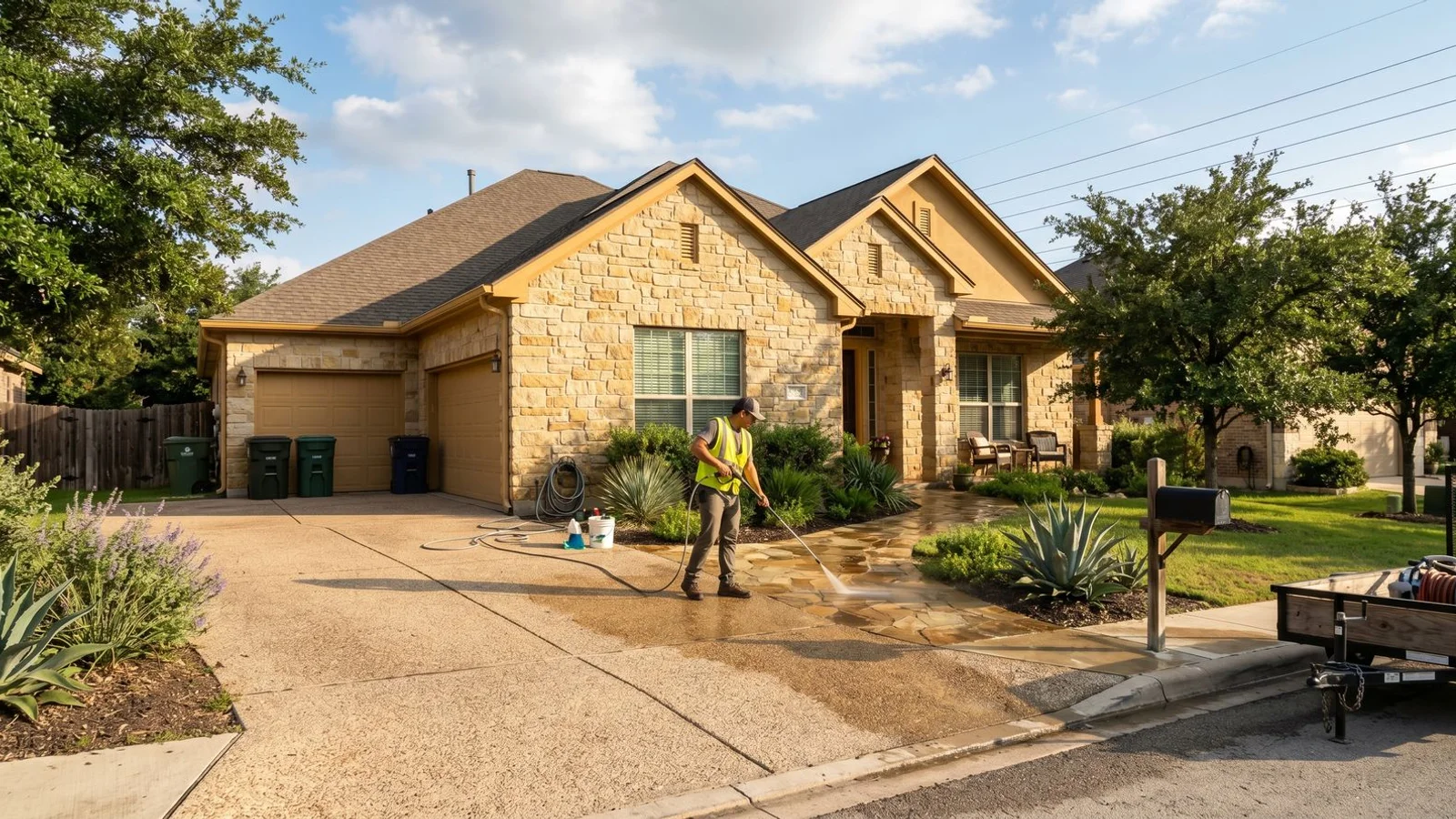
A Stone Oak family contacted us in late February with a problem we hear every cedar season: the house had been professionally vacuumed three times that winter and the kids were still sneezing. Two dogs, two kids, 3,800 square feet, and a cedar plume that had been hammering San Antonio since mid-December.
This is the kind of job our deep cleaning service is built for. Here is what we found, what we did, and what changed.
What was actually wrong
The household was using a high-end consumer vacuum — but a standard-filter consumer vacuum. Cedar pollen and limestone dust both sit well below the particle size that those filters reliably capture. Every vacuum pass was lifting allergens into the air, recirculating a portion through the exhaust, and depositing the rest a few inches further along the floor.
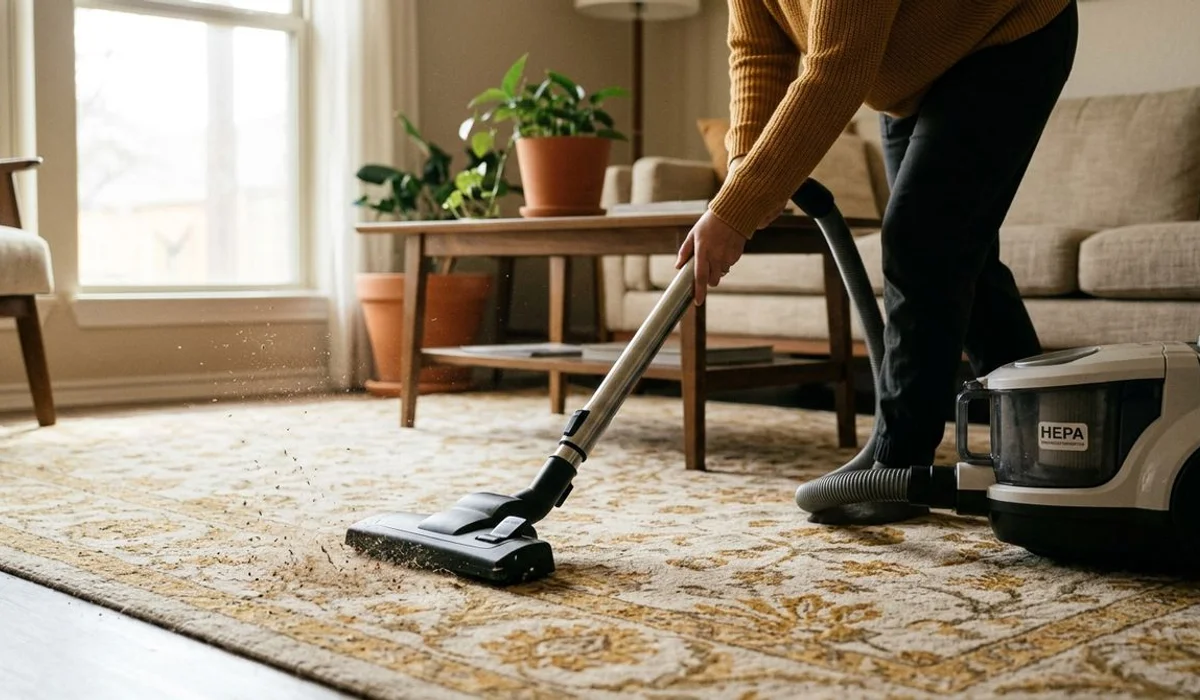
We confirmed this before starting. Our team’s HEPA-filter vacuum, run over the master bedroom rug, picked up visibly more material in 90 seconds than the homeowner had captured in a 30-minute session two days earlier. Same rug. Same area. Different filtration.
The deep clean we ran
A 3,800 sq ft home with two dogs and a recent cedar season needs more than a normal first-visit deep clean. We sent a team of three for a full day.
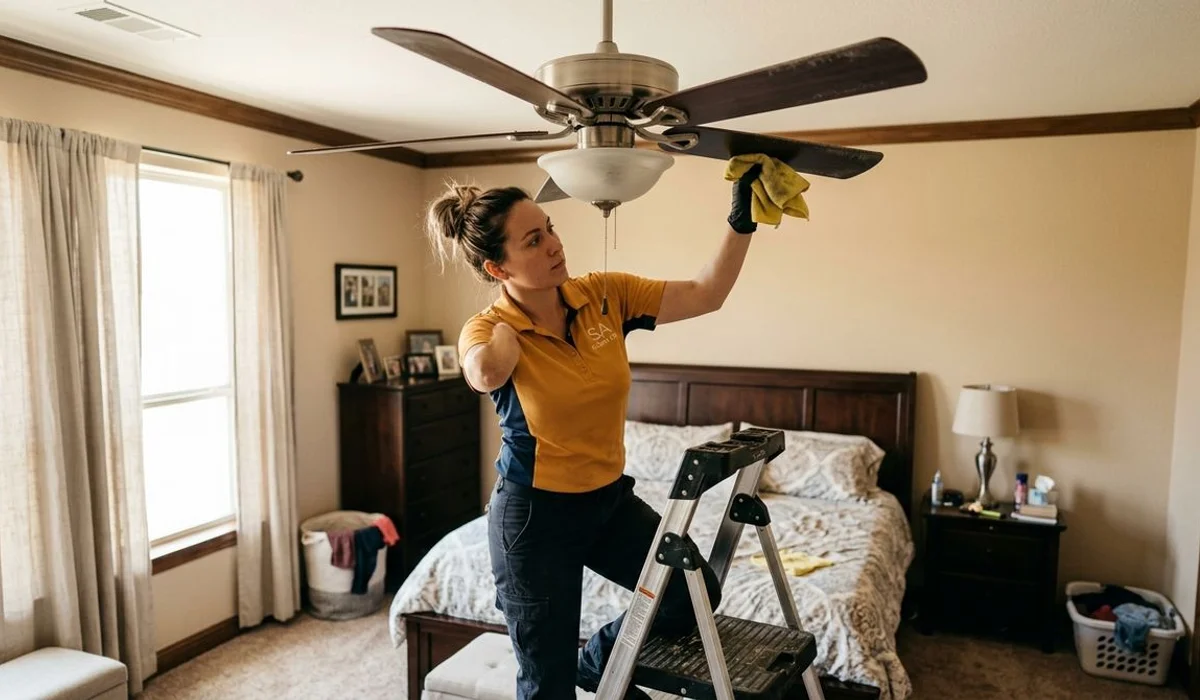
Top-to-bottom, back-to-front method. Every horizontal surface above shoulder height got HEPA vacuum or microfiber treatment first — ceiling fans, light fixtures, top of cabinets, blind valance, shelf tops. Dust falling onto floors that get cleaned later is the entire point of working in this order.
Soft goods. Drapes, area rugs, upholstered headboards, and the family room couch all got HEPA upholstery passes. These are the surfaces that quietly hold cedar pollen for weeks. Microfiber cloths bind allergens electrostatically rather than pushing them around.
Vents and HVAC returns. Cold-air returns in particular accumulate a cedar-season’s worth of fine particles. We pulled covers, vacuumed, wiped grilles, and replaced. We do not service ducts (that is a licensed-trade job), but the visible portions matter — they pull air past your face every minute the system runs.
Attic-stair gasket. The home had a pull-down attic stair in the upstairs hallway. We have learned to check these specifically — the gasket around the perimeter gets ignored for years and it is a major air-leak path between the unconditioned attic and the conditioned living space. Cleaning the gasket and surrounding trim removed a quiet source of recurring dust.
Pet-traffic zones. The dog bed corner, the back-door entry, and the kitchen-to-yard threshold got enzyme treatment for organic accumulation that the household had not noticed because they live with it. Different smell after, immediate.
Time and pricing
Three cleaners, full day (about 9 hours total per cleaner). Pricing for a job of this scope runs in the upper end of our deep cleaning range. The bundling of carpet add-ons (master bedroom, family room) brought the total slightly higher.
The household compared this to their winter vacuum sessions and the math worked: the time they were putting in (and not solving the problem) added up to more than a single deep clean would have cost.
Result
Two weeks later we got a follow-up email. The kids were sneezing meaningfully less. The dogs’ bedding had been moved (we recommended a new spot near a return-air register that captures pet dander). The household had switched to a higher-MERV HVAC filter on our recommendation.
A deep clean is not a permanent fix for cedar season — it is an annual reset. The household has booked a recurring biweekly standard cleaning and a second deep clean for late October, before the next cedar plume hits.
Takeaway for Stone Oak households
If you are running cedar season with consumer-grade vacuum equipment and the family is still suffering, the equipment is the issue, not the cleaning frequency. HEPA capture and microfiber are not optional if allergen management is the goal. Late February (post cedar) and October (pre-cedar) are the two most useful deep-clean booking windows in San Antonio.
For the full scope of what a deep clean covers, see what’s included in a deep cleaning, and deep cleaning for San Antonio allergies goes deeper on the cedar-pollen and limestone-dust dynamics specifically.
If your household is running the same pattern, we can help. Get a free quote — we will run the math with you before scheduling.