Construction Dust Removal — Why HEPA and Microfiber Matter
Drywall particle size and respiratory risk. How HEPA vacuums capture vs redistribute. Microfiber capture mechanism. HVAC contamination prevention.
Published May 9, 2026
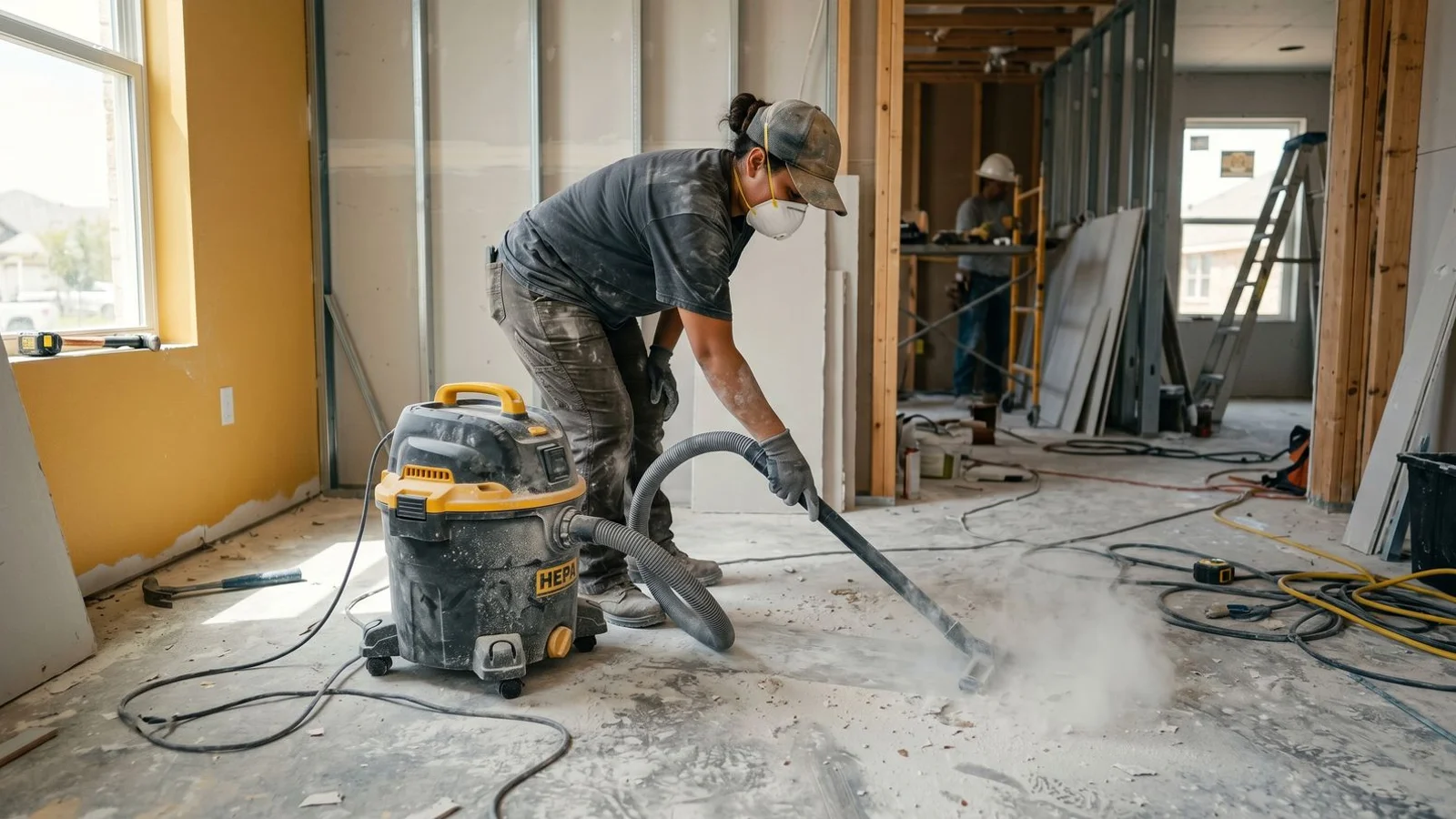
We see it all the time with post-remodel cleanup.
A newly renovated space looks perfect for exactly one day before a white film settles over every surface. The single biggest reason this happens is using the wrong equipment. Standard vacuums and cotton dusters just push particles into the air.
Our team relies on specialized tools because effective construction dust removal requires actual extraction, not just relocation. Let us look at the technical reasons behind this process and explore exactly what it means for your project.
This guide expands on what we cover in our full post-construction cleaning service; use it as the deep-dive companion to that page.
Drywall dust particle size
What exactly makes drywall debris so difficult to capture? The answer comes down to microscopic particle sizes that bypass normal filters. Drywall and gypsum fragments range from visible, coarse debris down to sub-micron fines.
These are particles smaller than one micrometer.
We can put this scale into perspective with a quick comparison.
| Material Type | Particle Size (Microns) |
|---|---|
| A grain of sand | 100 to 500 |
| A human hair | 50 to 100 |
| Standard pollen | 10 to 100 |
| Drywall fines | 0.5 to 10 |
| Common bacteria | 0.5 to 5 |
Those sub-micron fragments sit right at the threshold of respiratory penetration. They bypass your body’s natural defenses and get straight into the lungs.
The US Occupational Safety and Health Administration (OSHA) specifically classifies crystalline silica fragments as a severe respiratory hazard. Their current Permissible Exposure Limit is incredibly strict at just 50 micrograms per cubic meter of air. Our specialized drywall dust cleanup protocols ensure we stay well below those hazard levels.
How standard vacuums fail
Standard equipment fails because consumer-grade filters are too porous for construction debris.
A typical hardware store shop vacuum uses a paper filter rated for standard household dirt. These filters usually capture items between 10 and 50 microns in size.
We know exactly what happens when you suck up drywall fines with these machines:
- The visible chunks go straight into the collection bag.
- The microscopic particles pass right through the paper filter.
- The machine’s exhaust blows the invisible powder back into the room.
After a standard sweep with a consumer Ridgid or Craftsman vacuum, the airborne dust loads are often much higher than before the machine turned on. The floor cleanup merely lifted a toxic cloud into circulation.
This is why untrained cleanup crews leave a house that looks clean but gets dusty again within 24 hours. The tiny fragments never actually left the building.
How HEPA vacuums work
True High-Efficiency Particulate Air (HEPA) systems succeed by permanently trapping 99.97% of microscopic particles.
Drywall fines easily fall within this strict capture range. We use industrial-grade units that meet rigorous US Department of Energy standards for air purification.
Proper hepa vacuum construction relies on three essential components:
- Filter rating: True HEPA media with a 100% sealed exhaust path.
- Bag containment: Tear-resistant, sealed fleece bags rather than open canisters.
- Power and CFM: High Cubic Feet per Minute airflow to pull fine powder out of carpet fibers.
Our equipment utilizes true HEPA certification rather than the misleading “HEPA-style” marketing label. There is a massive functional difference between these two categories. Those cheaper “HEPA-type” filters miss enough fine powder to completely defeat the purpose of professional extraction.
Using professional brands like Festool ensures those hazardous fragments are locked away forever.
Microfiber capture mechanism
Traditional cleaning cloths push dirt around, while synthetic microfiber physically traps it.
Cotton dusters and old t-shirts wipe by friction. This temporary lifting action drops most of the dirt back onto the floor within seconds.
We utilize a completely different scientific principle for microfiber dust capture.
The mechanism relies on electrostatic attraction. Split microfibers, which are thinner than a single denier, carry a positive charge that acts like a magnet for negatively charged drywall powder.
When you wipe a quartz countertop with a clean microfiber towel, the fragments transfer from the stone to the fabric and lock into the microscopic fibers.
Our post-construction protocol utilizes microfiber in two specific passes:
- Dry pass: Captures the loose surface powder using pure electrostatic charge.
- Damp pass: Picks up bonded residue using highly filtered water.
A damp pass requires minimal moisture to succeed. We use a lightly moistened cloth rather than a soaking wet rag. Excess water turns fine plaster powder into a stubborn mud that stains baseboards and grout lines.
HVAC contamination
The most expensive consequence of amateur cleanup is permanent contamination of your home’s ductwork.
During an active remodel, the climate control system should remain off and tightly sealed. Once the unit turns back on, the blower motor pulls return air from every room in the house.
We constantly warn homeowners about this unseen danger. Any disturbed fine powder still circulating in the air will get sucked directly into the vents.
Once drywall plaster enters the ductwork, it coats the galvanized steel interiors and recirculates every time the heat or AC runs. The National Air Duct Cleaners Association (NADCA) notes that cleaning compromised residential ductwork is a specialized trade job. A proper sanitization typically costs between $400 and $1,000 depending on the size of the Texas home.
You can avoid this massive expense by following a few strict prevention rules:
- Keep the HVAC system completely off during the sweeping phase.
- Use sealed HEPA vacuums so you do not launch powder into the air.
- Allow all final airborne particles to settle before turning the HVAC back on.
- Install a brand new MERV 11 (or higher) pleated filter after construction.
Our teams cannot service interior ductwork directly since that requires an HVAC license. Washing all visible supply registers and return grilles falls within our scope of work. Replacing your main air filter immediately after our final sweep is always a mandatory recommendation.
Multi-pass approach for construction dust removal
A single sweeping session is never enough for a new build because airborne particles take hours to fall.
If a crew only cleans once, you will find a fresh layer of white powder on your kitchen island the very next morning. The industry standard for post-construction extraction requires two to three distinct phases.
We base our timeline on how long it takes different materials to drop out of the air:
- Initial pass: Removal of all gross debris, cardboard, and heavy floor dirt.
- Settle period: A mandatory 4 to 24-hour pause while airborne fragments fall from the ceiling.
- Second pass: Extraction of the newly resettled powder from countertops and floors.
- Optional third pass: A final detailed wipe-down right before the moving trucks arrive.
Coordinating these passes around your contractor’s schedule is crucial. A standard 2,500 square foot home in San Antonio usually requires a dedicated two-pass process split over two consecutive days.
Connection to allergy management
Leaving fine construction debris behind transforms a brand new house into a massive respiratory trigger.
Post-construction cleaning that misses this microscopic layer loads the indoor air with constant irritants. The Asthma and Allergy Foundation of America reports that indoor air quality directly impacts daily health for millions of Americans.
We use the exact same extraction techniques for remodeling debris as we do for seasonal Texas allergens.
True HEPA filtration and split microfiber cloths effectively handle a variety of local irritants:
- Pulverized gypsum and drywall dust
- Spring cedar pollen
- Hill Country limestone dust
- Standard household pet dander
Regular maintenance keeps the indoor environment pristine long after the builders leave.
For allergy-management cleaning specifically, see deep cleaning for San Antonio allergies.
Builder and GC partnerships
Coordinating with local construction teams ensures the final handoff is completely spotless.
We partner directly with custom builders and general contractors across San Antonio, Boerne (Cordillera Ranch), and the broader Hill Country market. Commercial agreements include recurring-project pricing for developers managing multiple active job sites.
Managing the chaos of the final week requires strict communication. Our teams coordinate site visits with the final trade schedules and dumpster pickups so the extraction process perfectly aligns with your timeline.
You can explore our specific service breakdowns through these local guides:
- For comparison with deep cleaning, see post-construction vs deep cleaning.
- For full scope details, see what’s included in post-construction cleaning.
- Get a project quote by sharing your square footage and trade timeline for accurate scoping.
Reach out to secure professional construction dust removal, and we will guarantee your property is ready for a safe, immediate move-in.
Related service
Need Post-Construction in San Antonio?
Drywall dust, debris, and finish wipe-down for new builds and remodels. HEPA equipment for safe respiratory cleanup. Coordinate with your GC.